

Automotive Equipment Trends 2024-2025 in LATAM

The Latin American automotive sector is moving rapidly towards electromobility, full digitalization and technological integration in processes and vehicles. Countries such as Chile, Uruguay, Bolivia, Mexico and Brazil are setting the pace with incentive policies, infrastructure development and modern industrial ecosystems. It is a key moment for manufacturers, distributors and B2B operators seeking efficiency, innovation and competitive differentiation.
1. Electromobility: Real Traction and Measurable Growth

  • Accelerated growth: In 2024, sales of electric vehicles (EVs) and plug-in hybrids in LATAM grew by 28% over the previous year. Sustained growth of 25-30% per year is projected by 2025.
  • Bolivia: World leader in lithium reserves (24%), is moving forward with battery manufacturing projects.
  • Uruguay, Chile and Colombia: They apply subsidies and tax exemptions, allowing EV fleet growth of over 30% per year in some segments.
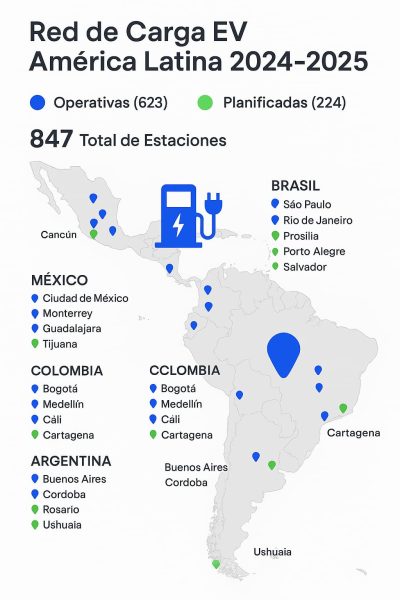
  • Infrastructure: The installation of charging stations is growing 18% year-on-year in the region, although technical standardization challenges hinder interoperability.
EV Charging Network Latin America 2024-2025

2. Advanced Electronics and Connectivity

  • Full digital integration:
    • OTA (Over-The-Air) upgrades, IoT and ADAS (driving assistance) systems already equip more than 60% of new B2B platforms in Brazil and Mexico.
    • Artificial intelligence (AI) personalizes the user experience, optimizes maintenance and reduces on-road incidents by an average 14%.

3. Digital Sales and After Sales: The Customer Decides 100% Online

  • Online sales: 65% of B2B buyers already opt for digital platforms to purchase or finance vehicles. Leaders in the region: Mercado Libre, Kavak and OLX Autos.
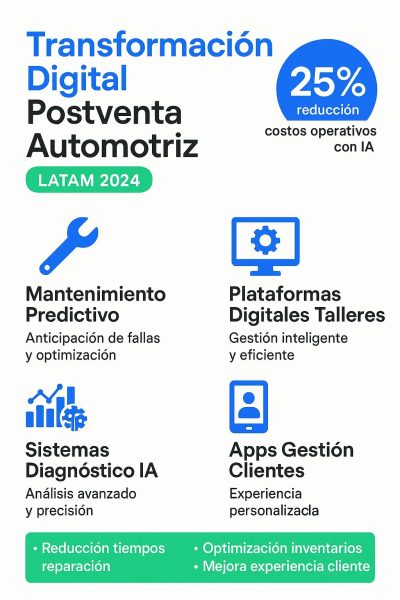
  • Digitalized after-sales: Predictive maintenance systems and workshop management platforms achieve:
    • 18% operating cost reduction.
    • Improved B2B customer service and satisfaction.

4. Customization and Accessories

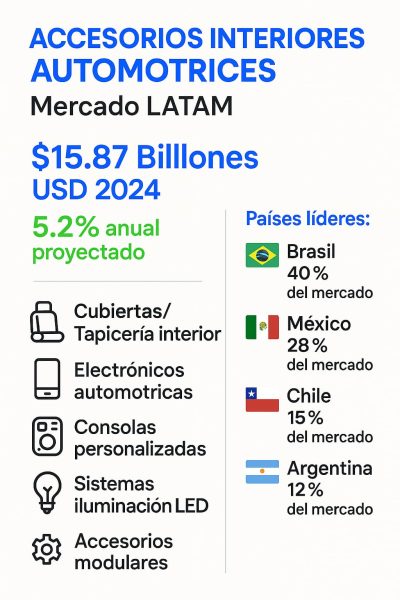
  • Market growth: Interior fittings in LATAM reached USD 15.87 billion in 2024 (+5.2% annually). Brazil and Mexico account for more than 60% of this market.
  • Star products: Multimedia systems, wireless chargers, LED lighting, consoles and connected security solutions.
  • Demand: A 35% of fleet purchases include at least two factory-customized modular accessories.
Infographics Automotive Accessories

5. Nearshoring, Regulations and Investment

  • Nearshoring: Mexico and the Southern Cone (Argentina, Paraguay, Uruguay) increase their B2B automotive production by 22% annually, reducing integration times and logistics costs.
  • Incentives: Elimination of tariffs, tax deductions for EVs and technical homologation drive adoption, especially in Chile and Uruguay.
  • Challenges: Economic volatility and regulatory differences persist, restricting homogeneous expansion.

6. Overview by Country/Subregion

  • Accelerated growth: In 2024, sales of electric vehicles (EVs) and plug-in hybrids in LATAM grew by 28% over the previous year. Sustained growth of 25-30% per year is projected by 2025.
  • Bolivia: World leader in lithium reserves (24%), is moving forward with battery manufacturing projects.
  • Uruguay, Chile and Colombia: They apply subsidies and tax exemptions, allowing EV fleet growth of over 30% per year in some segments.
  • Infrastructure: The installation of charging stations is growing 18% year-on-year in the region, although technical standardization challenges hinder interoperability.
Digital-transformation

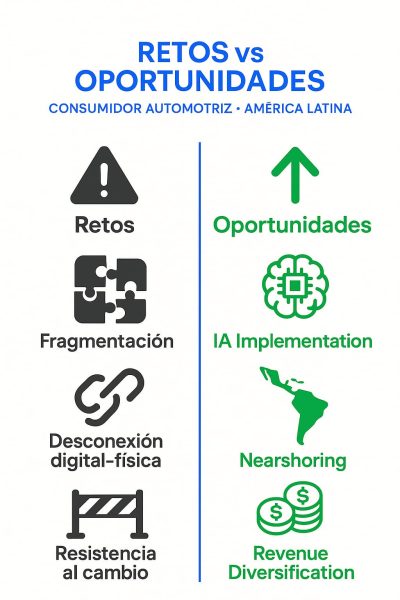
Challenges

  • Insufficient loading infrastructure and technical standardization.
  • Regulatory barriers that hinder regional homologation.
  • Lack of investment in technical training.
  • Resistance to change in workshops and after-sales processes.

Actionable Recommendations

  • Invest in infrastructure and public/private partnerships for EV charging.
  • Accelerate the digitalization and adoption of AI in sales and after-sales processes.
  • Promote technical training in ADAS, IoT and electrical.
  • Leverage incentives, dialogue with governments and standardize requirements.
  • Optimize the specialized regional supply chain via nearshoring.

The automotive industry in LATAM is undergoing a real and measurable transformation, based on innovation, digitalization and a long-term sustainable vision. At MTM Latam we have the experience, certified technology and human support to accompany you in this process.

Share this article

Receive technical insights, success stories and the latest in OEM innovation

Receive technical insights, success stories and the latest in OEM innovation

Keep up to date with the trends that are transforming the industry

Sources

Market research:

  • Expert Market Research. Latin America Car Interior Accessories Market, 2024
  • Global Automotive Consumer Study 2024
  • Fortune Business Insights. Global Automotive Aftermarket, 2024

Sector organizations:

  • Electric Mobility in Latin America and the Caribbean, September 2024
  • Latam Mobility. Net Zero: Southern Cone 2024

Specialized media:

  • com - Automotive aftermarket trends
  • cl - Automotive Equipment 2025
  • Tecnom - Digitalization and automotive industry balance sheet
  • ai - AI in automotive sales LATAM
  • Infobae - Automotive industry outlook 2025

The New Automotive Consumer Profile: Customer Journey Data-Driven in LATAM (2025 - 2026)

The automotive consumer in Latin America is undergoing a profound transformation: the digitization of the buying process, the influence of social media and customer value metrics are redefining the sector. Today, the automotive journey is a hybrid ecosystem-digital and physical-where the expectation of experience and personalization raises the bar for manufacturers, distributors and B2B operators.
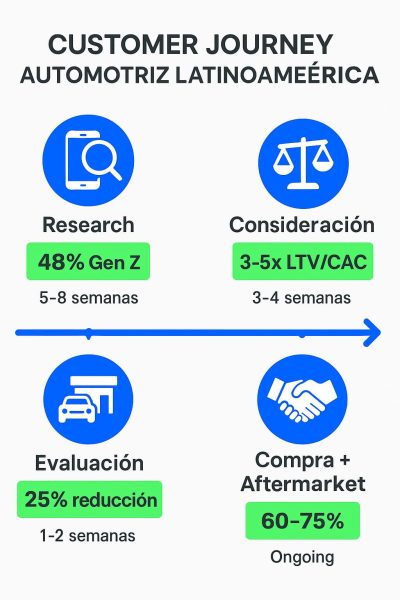
1. Generational Radiography: Who buys and how?

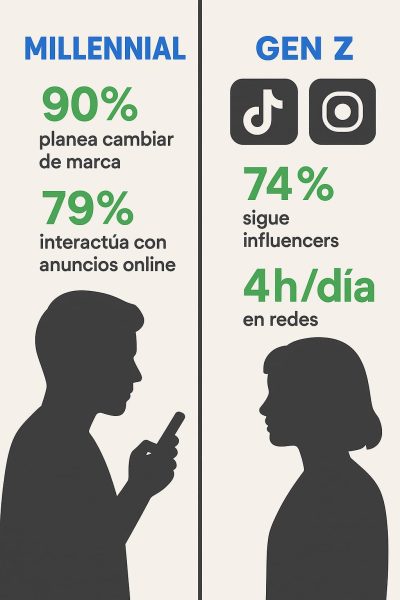
Millennials:

  • 4 out of 10 car buyers in Mexico are millennials.
  • 95% always connected, research online before you buy.
  • 90% is ready to rebrand; they are looking for efficienciesExplore our blog and resources to stay ahead of the curve.
  • RELATED ARTICLES
  • cia, reputation and technology.

Gen Z:

  • They prefer subscription models and flexible mobility.
  • 48% learn about products through social networks and 74% follow influencers.
  • They consume ephemeral content, seek authenticity and dynamic responses.

2. An Omnichannel and Measurable Customer Journey

  • The 76% initiates the purchase online, although most still visit dealerships for the final decision.
  • 65% already concludes the purchase digitally-an example of how the online and offline process intertwines.
  • Every touchpoint matters: Google, YouTube, Instagram, WhatsApp and dealer portals are a must in the decision making process.
20250901_2040_Automotive Travel Infographic_simple_compose_01k43xtnzke54rcjhd573qjx8k

3. Metrics that Make a Difference

  • Lifetime Value (LTV): Include sales, services, accessories and repurchase: the future is in measuring and anticipating.
  • CAC: In LATAM, digital acquisition can cost between US$200 and US$800, but word of mouth remains the most cost-effective channel.
  • Service retention: Up to 75% in some well-managed aftermarket programs.
  • Upsell: Customization and data increase the ticket in 30-40%.

4. Social Networks: Decision and Experience

  • 61% of millennials and 60% of Gen Z have made impulse purchases over networks.
  • Instagram and Facebook lead purchasing processes, YouTube establishes authority for reviews and tutorial content.
  • Strategies vary: for millennials trust is essential, while for Gen Z authenticity and immediate interaction are essential.
20250901_2035_Generaciones Digitales Comparadas_simple_compose_01k43xjcxtegns1469jvwcnd38

5. Strategic Implications

  • Optimizing the journey requires investment in digital tools, AI and data-driven marketing.
  • Unifying data-CDP, CRM and social listening-powers relevant experiences and real engagement.
  • Mobile is already the main discovery and interaction platform for decision makers and end users.

6. What Product Managers, Aftermarket and Operators Look For

  • Fluid and scalable digital experiences, without losing personalization.
  • Suppliers that demonstrate technical authority, evidence and understanding of the LATAM context.
  • Social proof, references and educational materials: whitepapers, success stories and benchmarks to help in decision making.
20250902_1116_Automotive_challenges_and_opportunities_simple_compose_01k45fyqdmeqavyf5ayf113mmz

Share this article

Receive technical insights, success stories and the latest in OEM innovation

Keep up to date with the trends that are transforming the industry