


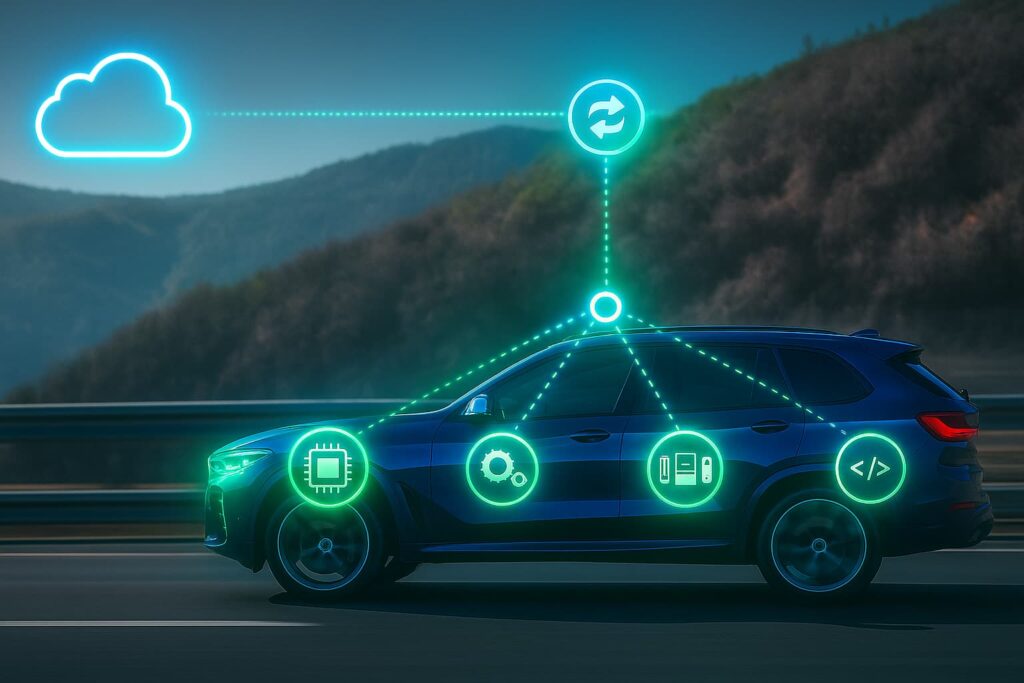
OTA updates - OTA updatesOver-The-Air- are the system that allows remotely update vehicle software, without physical intervention or a workshop visit. This technology represents a turning point in the automotive industry: vehicles are no longer static machines, they become digital platforms that evolve over the course of their life cycle.
For manufacturers, fleets and distributors, OTA is much more than a technical innovation. It is a new strategy for efficiency, safety and after-sales value, which redefines the relationship between hardware, software and service.
The new era of automotive software
The automobile is no longer a collection of mechanical parts, but rather a constantly evolving software platform. The infotainment, navigation, safety and advanced assistance systems (ADAS) are interconnected and rely on a flexible electronic architecture that allows for constant upgrades.
OTA updates make this evolution possible without the need for workshop visits or physical replacement of components. Through a secure wireless connection, the manufacturer can improve functions, fix bugs or add new capabilities directly from the cloud.
In technical terms, OTA allows:
Remote firmware and software update.
Reduced maintenance and recall costs.
Improving the driver's experience through new or adjusted functions.
The immediate application of cybersecurity patches.
According to McKinsey & Company (2023), the evolution towards software-defined vehicles -SDV- will completely transform the automotive value chain. In this new paradigm, the ability to remotely update and upgrade the vehicle will be a key competitive factor for manufacturers and their technology partners.
Impact on manufacturers and distributors
For manufacturers, OTA opens up a new horizon: it allows them to collect real-time data, optimize algorithms, detect faults and deploy functions without physical intervention.
For distributors, it involves new digital service models, such as predictive maintenance, remote customization and continuous upgrades.
The industry is moving towards business models based on software and after-sales subscriptions, where each vehicle becomes an active source of information and added value.
Challenges: safety and standardization
The flexibility of OTA also brings risks.
Systems must be designed with automotive cybersecurity protocols (ISO/SAE 21434), to ensure protection against vulnerabilities and malicious updates.
End-to-end encryption, software authentication and pre-validation are essential to maintain system integrity.

Trends towards 2030
The future of automotive software is defined by data.
According to McKinsey, The market for vehicle software and electronics will grow steadily through 2030, driven by centralized architectures that enable faster and more secure OTA updates.
Major global trends:
Telematics-cloud convergence: vehicle data is consolidated as a strategic asset.
Centralized I/O architectures: basis for massive OTA deployments.
Digital after-sales services: premium upgrades and subscriptions.
LATAM interoperability: adaptation to regional connectivity.
Strategic vision for LATAM
In Latin America, OTA adoption is progressively advancing as global manufacturers localize operations and strengthen their network of technology providers.
The focus is on improving connectivity infrastructure, professionalizing cybersecurity y creating integration alliances between OEMs and regional technology partners.
According to Deloitte, consumers in the region are increasingly embracing connected services and remote software updates.
Conclusion
OTA updates are no longer a promise: they are the invisible infrastructure that keeps the automotive ecosystem alive.
Their adoption drives operational efficiency, digital security and new revenue streams.
The challenge for manufacturers and distributors in LATAM will be to integrate them with a long-term strategic vision, The new system guarantees compatibility, robustness and a seamless experience.
If you want to know how to MTM can implement OTA solutions tailored to your production line or connected fleet., Contact us.
Frequently Asked Questions
What are OTA updates in vehicles?
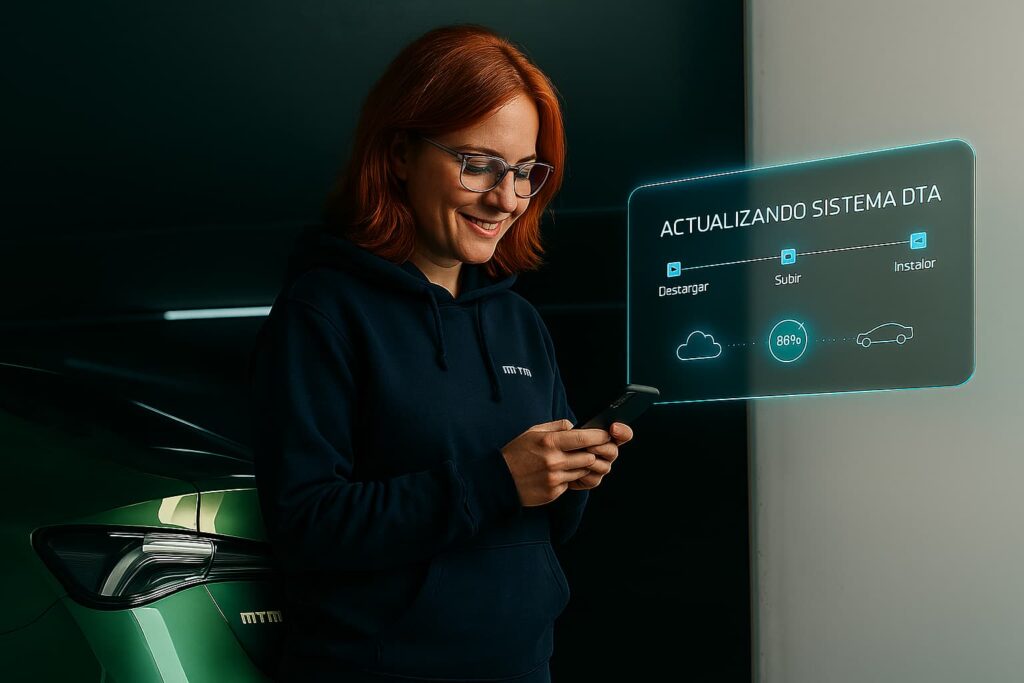
These are processes that allow update vehicle software remotely and securely, without physical intervention or workshop visit.
What benefits do you offer to manufacturers and distributors?
They reduce operating costs, enable the launch of new functions, improve cybersecurity and strengthen the after-sales relationship.
What challenges do they present?
The main ones are the cybersecurity, the cross-platform standardization and compatibility with different architectures.
How are OTAs implemented in Latin America?
Its implementation depends on the development of connectivity infrastructure and collaboration between manufacturers, distributors and technology partners.
Share this article
Receive technical insights, success stories and the latest in OEM innovation
Keep up to date with the trends that are transforming the industry
Sources
🔗 Source McKinsey - Getting ready for next-generation E/E architecture with zonal compute (2023)
🔗 Source Deloitte - Software-Defined Vehicle: Global manufacturer readiness (2024)
🔗 Source SAE - ISO/SAE 21434 Road Vehicles - Cybersecurity Engineering (datasheet)
🔗 SAE Technical Note - Publication of the Joint Standard (2021)
🔗 McKinsey - Mapping the automotive software and electronics landscape through 2030
🔗 McKinsey - The big shift: Moving commercial vehicle OEMs to centralized E/E and software (2024)
🔗 Capgemini - Connected Vehicle Trend Radar 2 + PDF (2024)